
Measure your headphones. Record through your own ears.
EarEqual BCR — Binaural Calibration and Recording — is one wearable measurement system for two first-class jobs: measure what your headphones actually do on your own ears for individualized calibration, or capture true stereo shaped by your own head and outer ears.
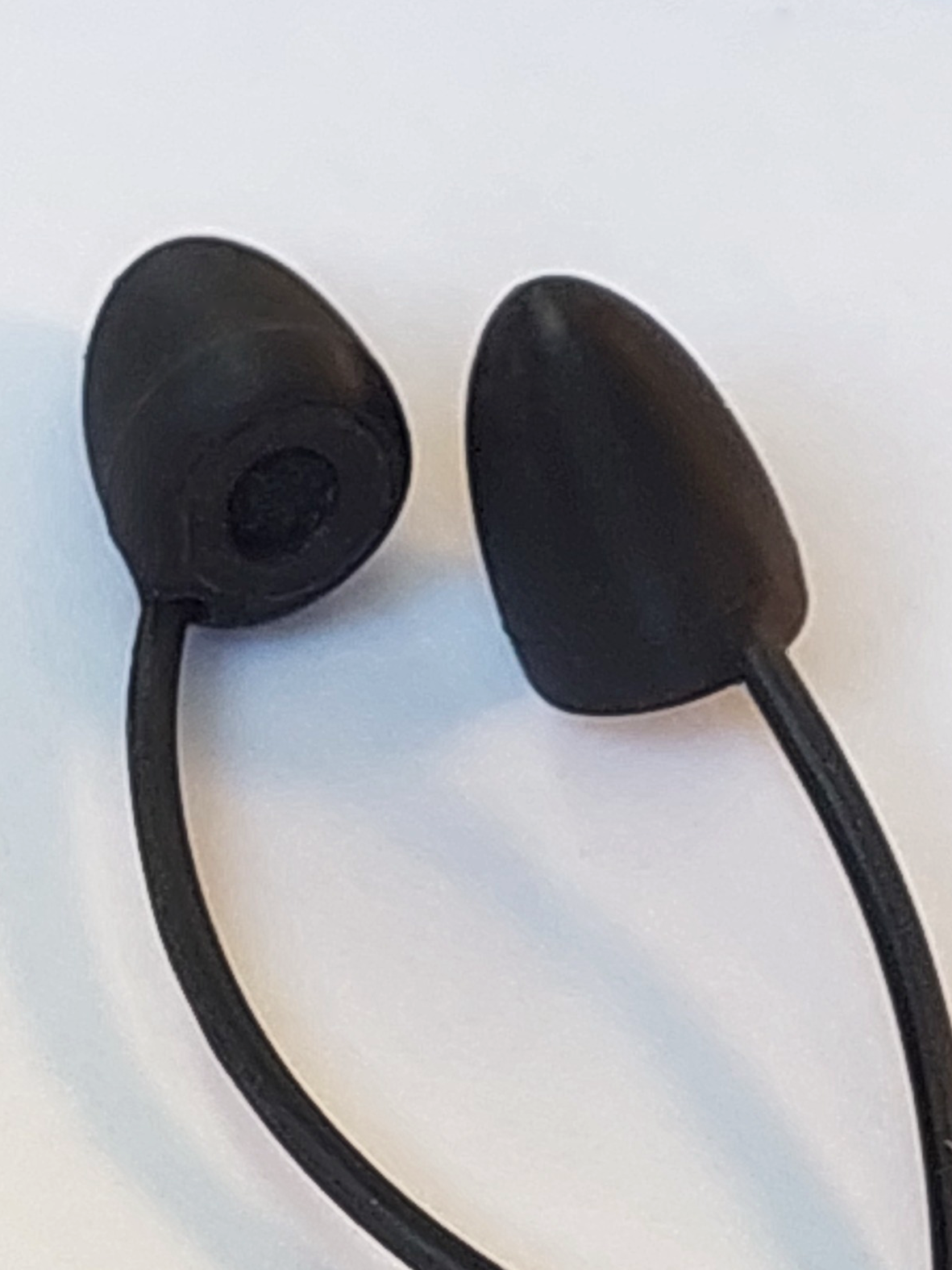
Binaural Calibration and Recording.
A compact left/right in-ear measurement system with two independent microphone channels and a 3.5 mm TRS connection.
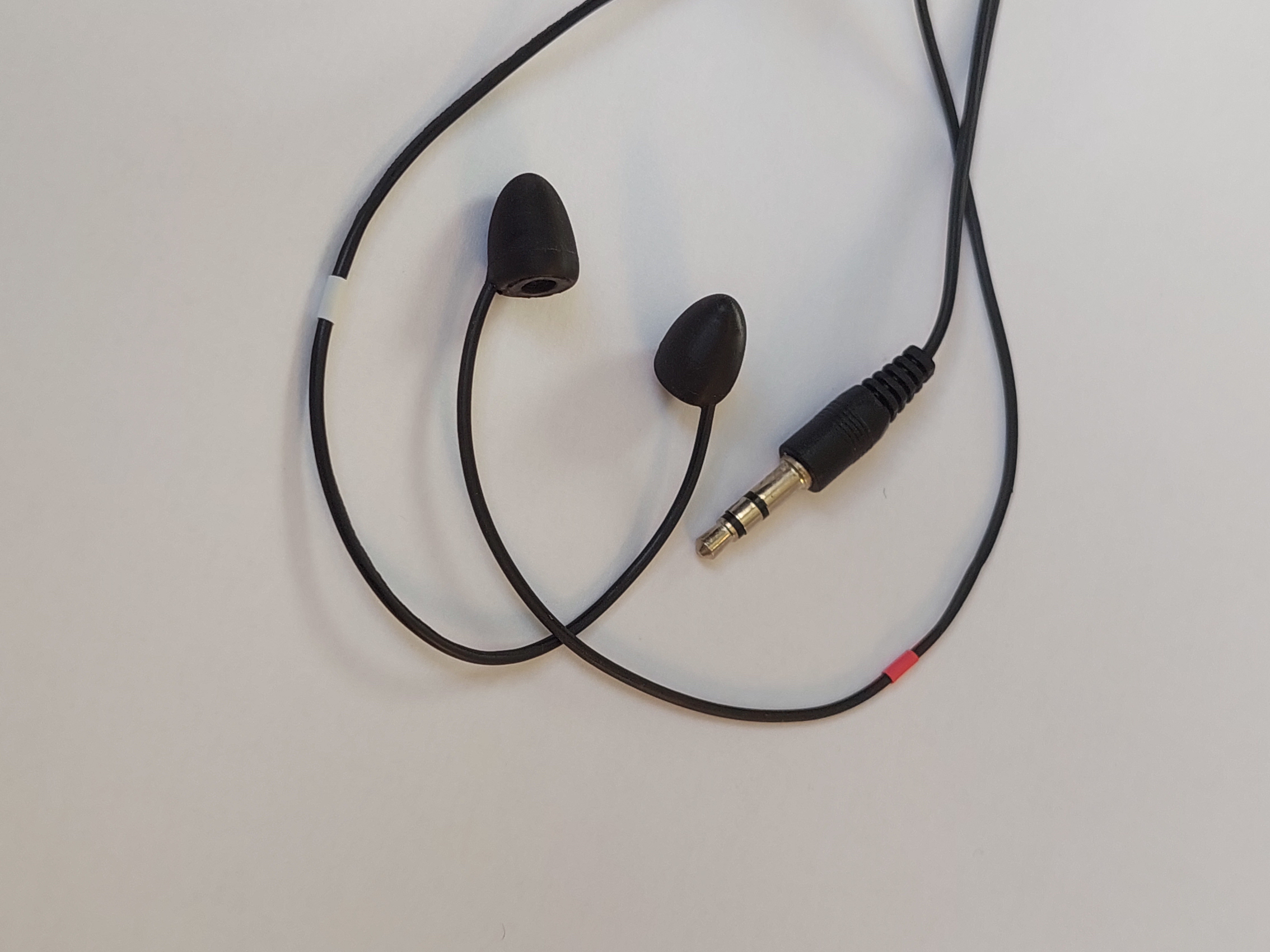
Early-bird price + €10 shipping worldwide. For EU orders, VAT is included. For US orders, customs and import duty are included in the shipping. Other countries may incur local import charges.
Supplied as a left/right pair with 3.5 mm TRS cable.
Before ordering, see the setup & safety guide and cleaning & hygiene notes.
Labs, universities and companies: email us for a pro forma invoice and bank transfer.
Order EarEqual BCRMicrophone
- Type
- Electret condenser, omnidirectional
- Diameter
- 6.0 mm
- Sensitivity
- −32 ±3 dBV/Pa (1 kHz)
- Frequency range
- 20 Hz to 20 kHz
- SNR
- 75 dBA
- RoHS
- Yes
BCR earpiece
- Material
- Platinum-cure silicone, Shore A20
- Dimensions
- 8.0 / 8.7 × 12 mm
- Cable
- TRS, 3.5 mm plug
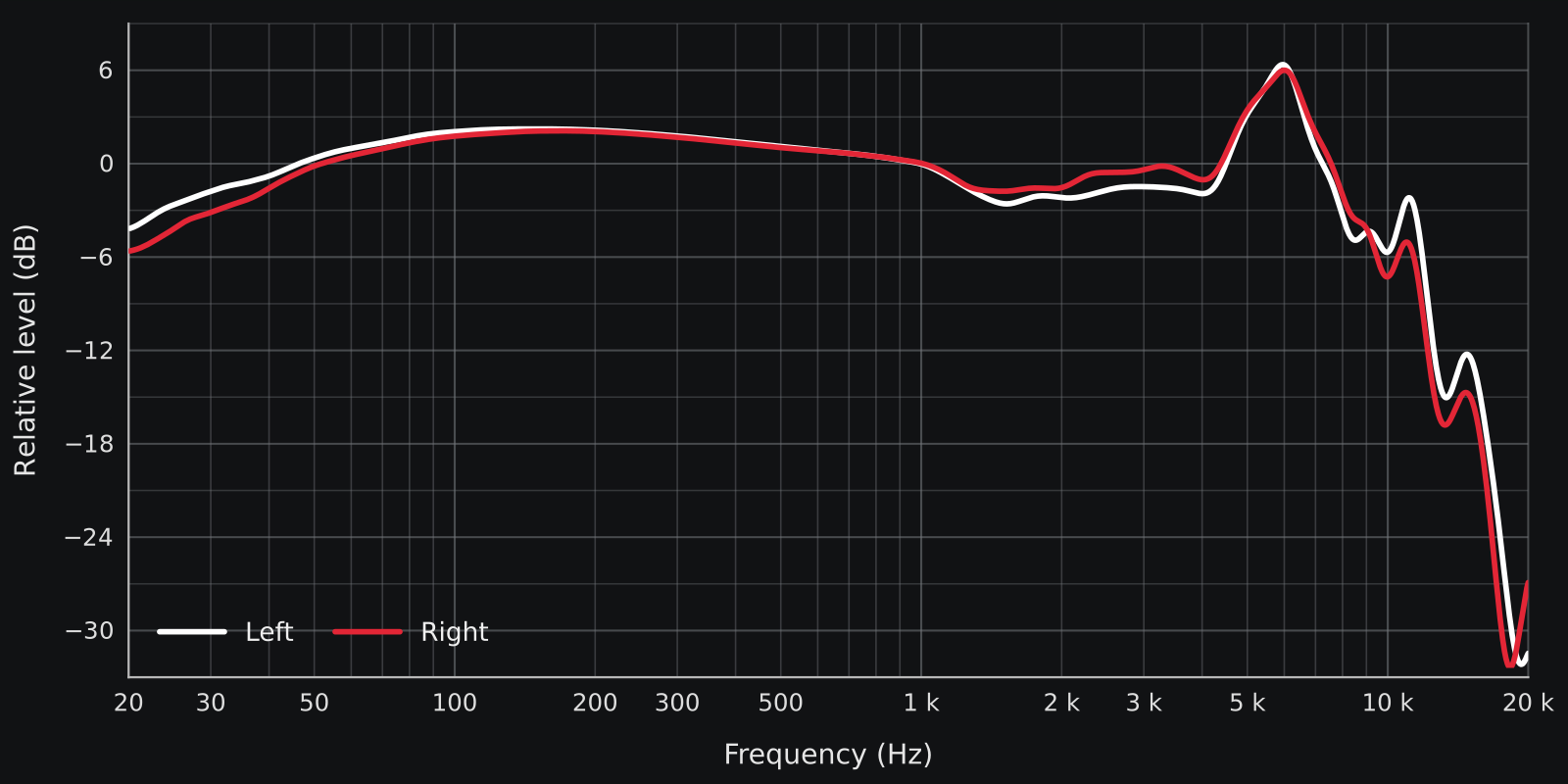
Measured on a real listener
This is the kind of individual headphone-ear response BCR measures: the headphone in its actual fit, at the blocked ear-canal entrance. The curves are shown as measurement evidence, not as a generic target or a claim that every listener should look the same.
Use either function on its own. Use both and they connect.
BCR places a microphone at each blocked ear-canal entrance. That same physical position can be used to measure your headphones or to record the sound arriving at your own ears.
Measure the headphones on you
Your headphone response depends on your anatomy, fit and seal. Measure that response on your own ears, then correct it using either your own measured acoustic target or EarEqual Reference Target v0.1, a technically motivated blocked-ear starting reference.
Record through your own outer ears
Record true left and right channels while your own head, pinnae and conchae shape the spatial cues. The BOYA BY-K4 can provide a low-cost stereo USB-C input path for phones, tablets and computers where host compatibility permits.
Measure → target → correction
Measure your headphones
BCR measures the coupled headphone/listener response at the blocked ear-canal entrance, including the real fit and leakage on your head.
Choose a compatible target
Use your own measured acoustic target or EarEqual Reference Target v0.1, a technically motivated blocked-ear starting reference.
Create the correction
Use REW today for the complete manual workflow. The EarEqual App is in development to streamline measurement, QC and EQ generation.
Calibration workflow · Targets and reference plane · Setup guide
Record and calibrate at the same acoustic reference point.
For playback of your own binaural recordings, capture and headphone measurement use the same blocked-ear reference point. That makes the recording and playback calibration directly comparable at the same acoustic plane. When BCR is removed for normal listening, your own downstream ear-canal acoustics return naturally in the playback path.
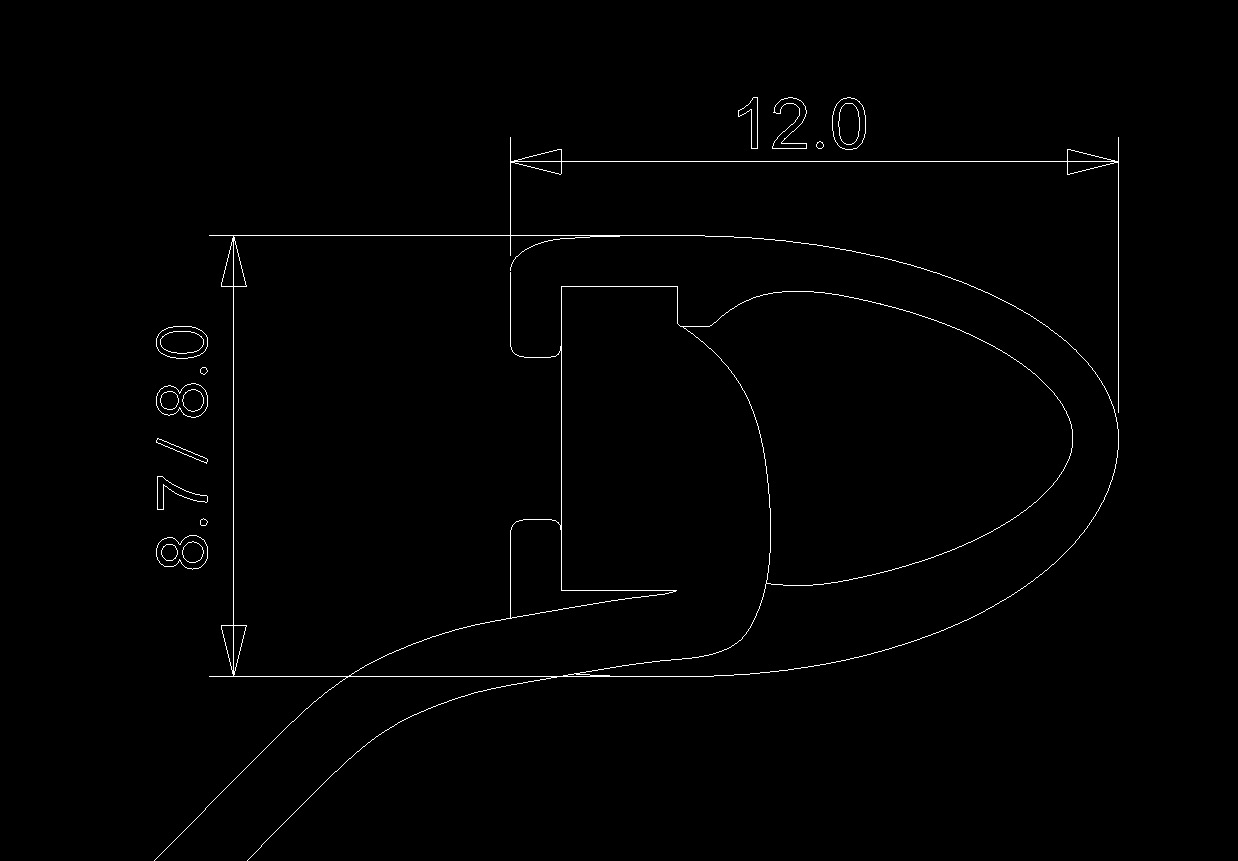
Dimensioned cross-section of the BCR earpiece. The ear-canal side is soft and thin-walled (Shore A20 silicone), and the internal cavity makes it noticeably flexible rather than the solid piece it may appear to be in photos.
Dimensions in mm: 12.0 length · 8.7 vertical / 8.0 horizontal.
Built from acoustics, engineering and product development.
I'm Marko Hiipakka, a Finnish acoustics and audio engineer with a PhD in acoustics and audio signal processing from Aalto University, Finland. I've worked across research, product development, prototyping and audio engineering, with ear acoustics, headphone measurement and individual sound reproduction recurring throughout that work.
EarEqual grew out of that background: taking measurement methods that normally belong in laboratories and turning them into practical tools people can use themselves.
EarEqual is open to conversations with strategic investors and industry partners who can help accelerate the development and commercialization of its personal-audio measurement and calibration technologies. For strategic enquiries: hello@earequal.com.
EarEqual BCR is the first product, for individual headphone calibration and binaural recording. I'm also developing EarEqual BCI (Binaural Calibration In-ear), which brings the measurement microphone into an eartip for individual earbud measurement. The BCI hardware is already working and the measurement software is in development.